
Tradition
Traditional Portuguese sardines: the classic styles explained
Olive oil, tomato, piri-piri, lemon. A short guide to how Portugal cans sardines, why hand-packing still matters and which houses keep the tradition.
A craft that never became an afterthought
Portugal has canned fish on an industrial scale since the late 19th century, in coastal towns such as Matosinhos, Peniche and Portimão. Where canned fish elsewhere became a cheap staple, many Portuguese houses kept the process close to its origins: fresh sardines cleaned, cooked and laid into the tin by hand. The story of that industry is told in our conservas culture article.
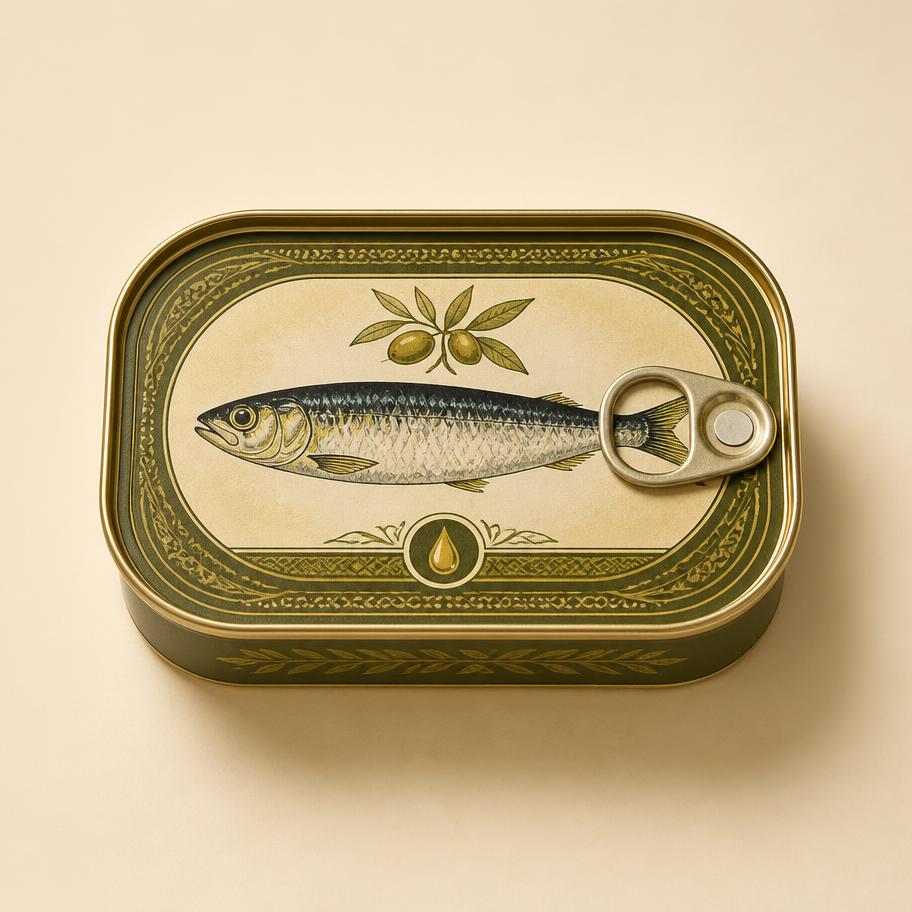
Olive oil: the reference tin
The most traditional Portuguese tin is simply sardines in olive oil. With few ingredients, the quality of the fish and the oil decides everything, which is why it is the best place to start. Browse sardines in olive oil.
Tomato, piri-piri and lemon
Tomato sauce is the everyday classic, soft and slightly sweet. Piri-piri adds the chilli heat Portugal borrowed from its sea routes, and lemon or garlic versions freshen the oil. Explore tomato, spicy piri-piri and lemon, garlic & special tins.
Hand-packing and heritage houses
Some producers still pack every tin by hand. NURI has worked in Matosinhos since 1920, and Minerva, Ramirez and Bom Petisco are long-standing Portuguese names. Our brand guide introduces each house.
Where to begin
Start with one olive-oil tin, then taste a tomato and a spicy version side by side. Our tasting packs make that easy, and the gourmet selection gathers the most distinctive tins.